- 2026 Silver Prize
- From Landscape Design
C16.LYRA ECHO ISLAND
Project Description
Southern France, from the mid-19th to the early 20th century, brought fresh colors, sunlight, breezes, poetry, and hope to our world alongside the birth of Impressionism and Fauvism. Immersed within it, lavender and olive trees are within our reach.
As a concept with in China, Southern France represents an aspiration. However, before this, we had never undertaken such a representative landscape style. Numerous challenges rendered this project difficult.
"Reveal nature, restrain traces" is the philosophy we intended to convey this time. By breaking through the thinking of "inertial product logic" and stepping outside "design" to look at design, we aimed more to create a "state" and endow it with a sense of "imagery." The essence of design lies in creating unique value. Excellent works should not be limited to discussions of subjective aesthetics; they should use thinking to construct methods and consciousness to guide direction.
From "Trace" to "Traceless"
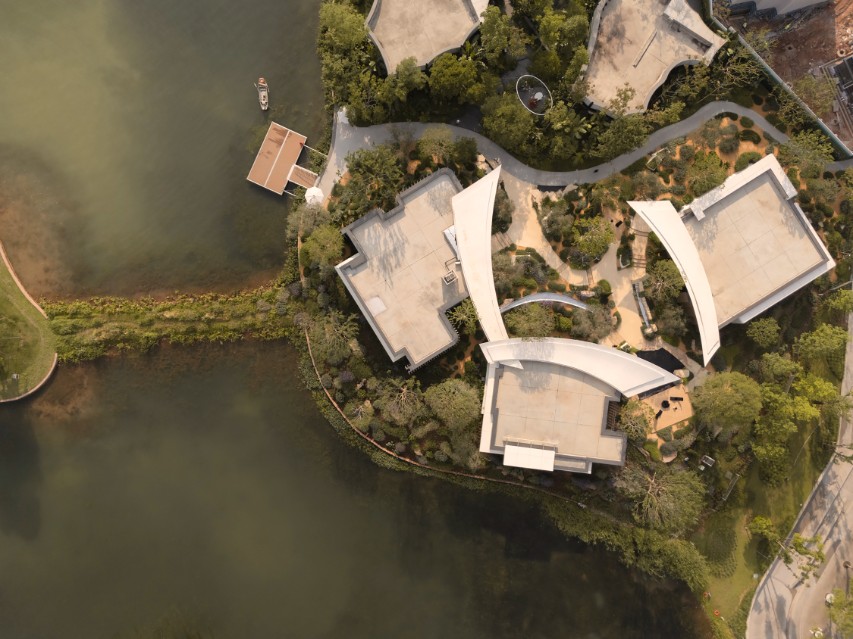
The C16 Model Garden is located in the lakeside area of Chengdu LUXE Lakeside Eco-City, on the west side of the entire model garden's large plate island. Considering the site itself, it was necessary to integrate the architecture and landscape of different housing types. The extensive revetment sections and the landing pier added to the design difficulty. Furthermore, the pier, being the only circulation path, required that people on the boat, upon arriving at the island and seeing the beginning of the entire revetment space, could immediately feel immersed and sense the unique feeling. The integration of the large revetment sections with the broader environment was also a crucial consideration for the overall ecological macro-interface.
Cliffs and campsites are the characteristics we bestowed upon the site. Geometry and three-dimensionality are the traces we left on the site. Romance and relaxation are the states we aimed to create after construction.
"The revetment creates a sense of territory, focusing on the shaping of the skyline and shoreline language."
"The terrace creates space, molding height differences, endowing the space."
"The boundary creates interaction, stitching boundaries, softening the perimeter."
"Plants provide emotion, using natural strokes to mobilize participants' emotions."
"Materials highlight texture, the traces of time visualized."
Stone Cliffs
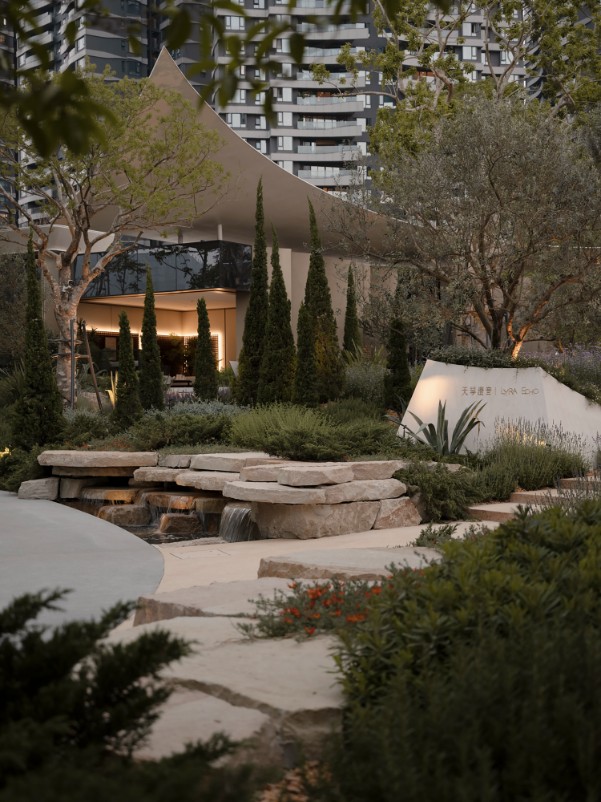
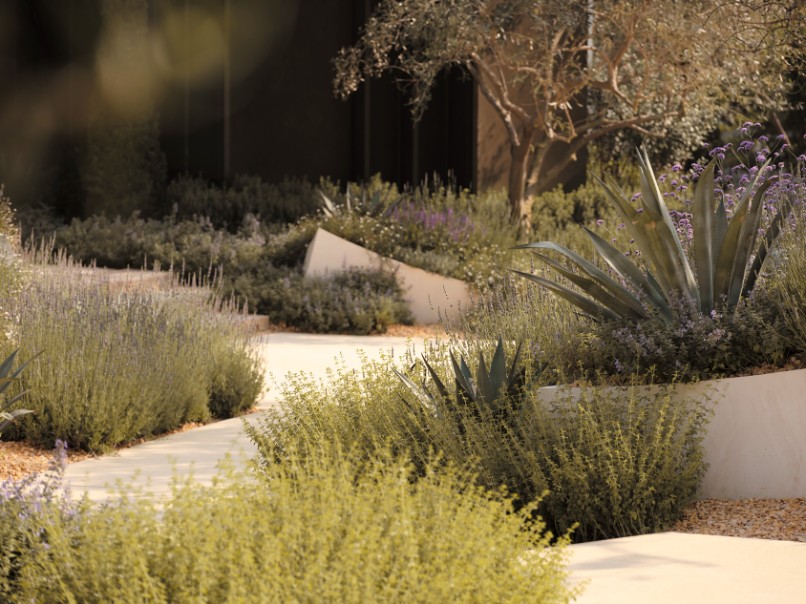
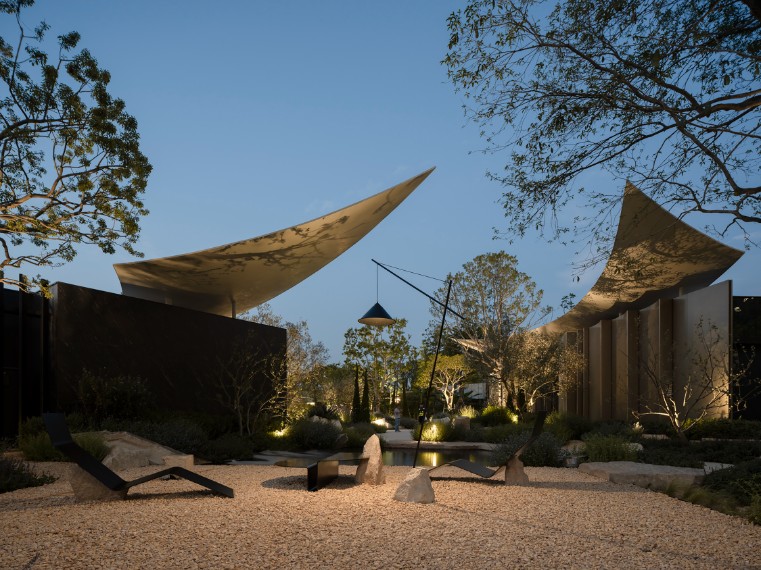
As the unique language expression for the site, we artistically interpreted the language of Saint-Tropez, the cliff-side stone town on the Mediterranean coast. We used white geometric forms to summarize the cliff texture, inducing deformation and imparting artistic interest. Words like "contemporary," "abstract," and "classic" were the initial guiding thoughts, while also summarizing and refining the language system for the project's context, shaping a systematic feature with uniqueness.
Ring Hills
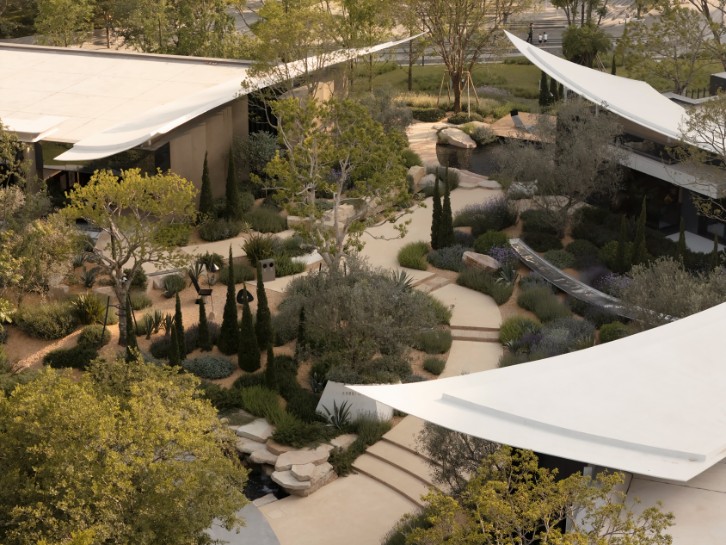
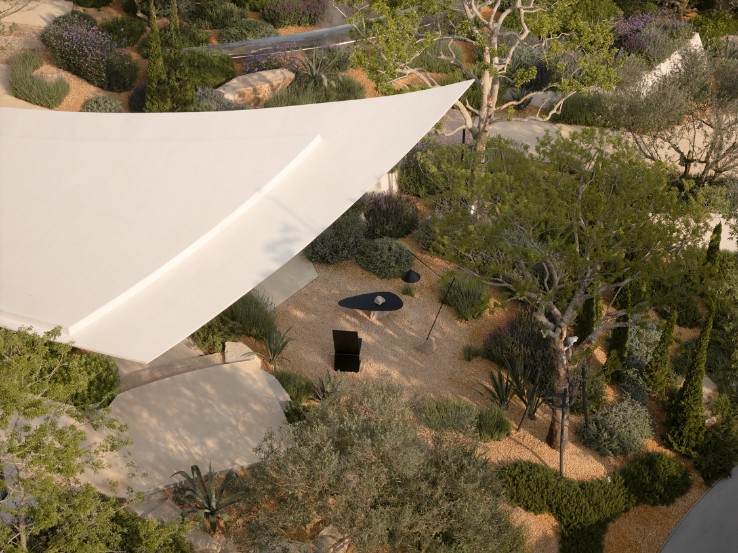
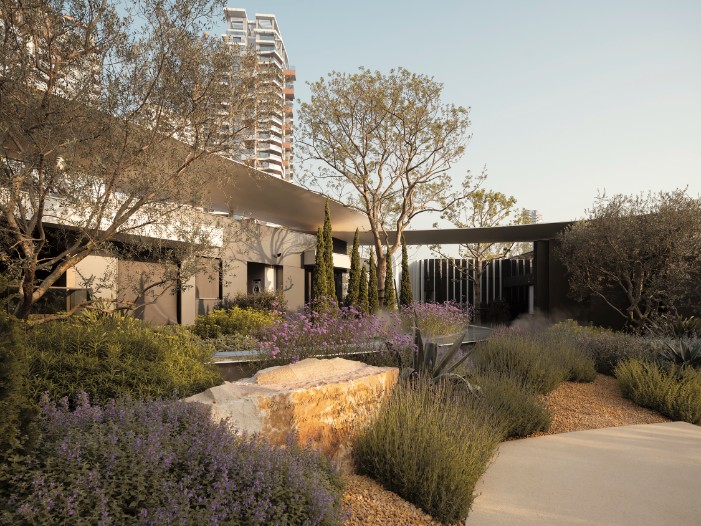
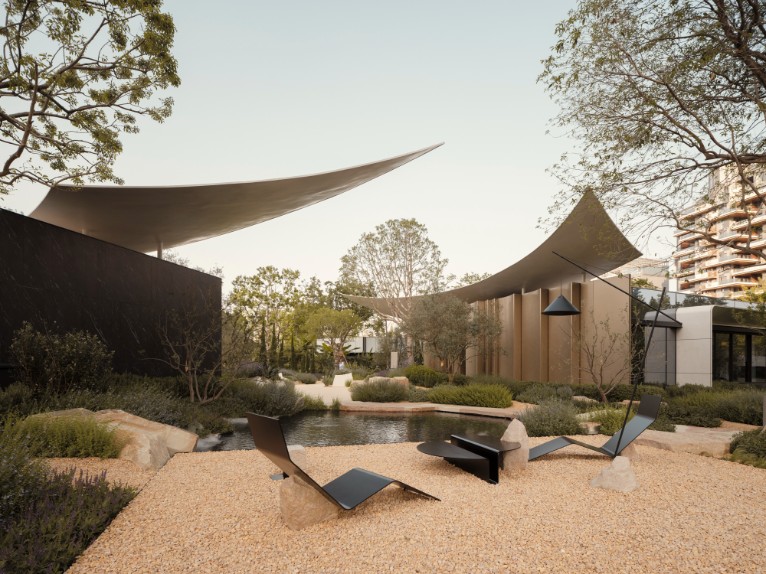
The three buildings on site had different exterior skins. We contemplated how to establish a language system based on the principle of contrast and unity. This led to the idea of using white volumes to perform playful "stretching exercises" on the building tops, forming a lively architectural cluster.
Regarding material performance, we approached it with playful intent: using trusses as the overall material structure. Initially, we envisioned using mirrored surfaces for the upper volumes, extending the planting palette vertically to form an interesting installation art piece – a "sky garland." The lower volumes, intended as secondary structural reflections, were designed to fold downwards, creating internal reflections to conceal the truss columns and beams, making them seem to float on the building roofs. Simultaneously, the upward reflection could better serve as insulation, ultimately forming a "ring cluster."
Water Effect
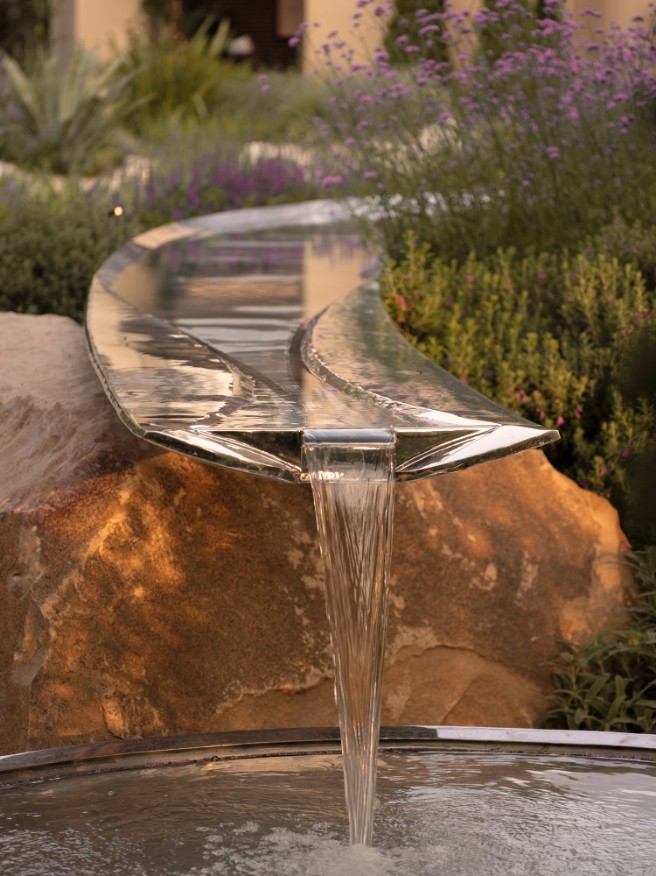
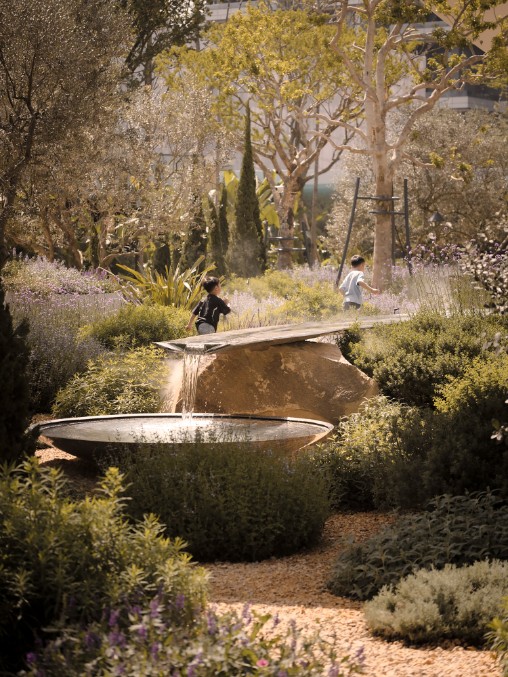
Continuing the design language consistently, we brought the top truss form back down into the garden while maintaining the system of contrast and unity. The "Cobra Water Belt" in the garden borrows the cobra's hood-like flared structure. Viewed from the front, the falling water precisely passes through this structure, resembling a "snake's tongue."
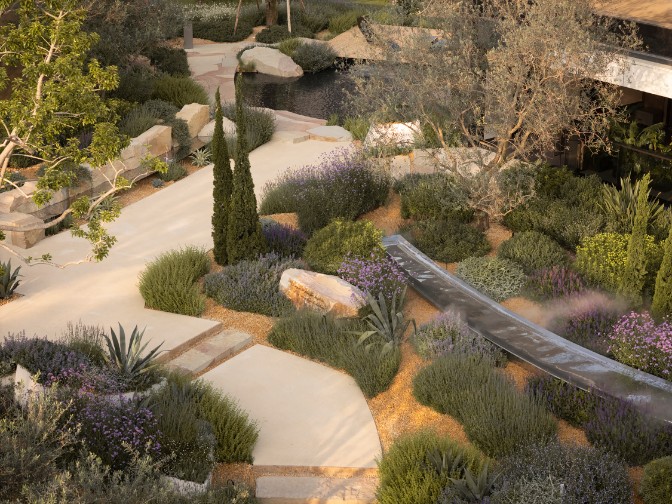
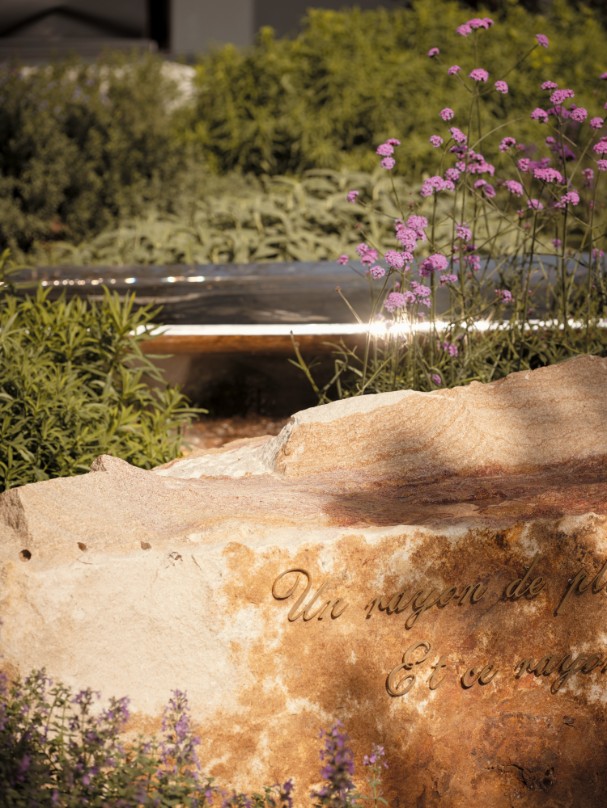
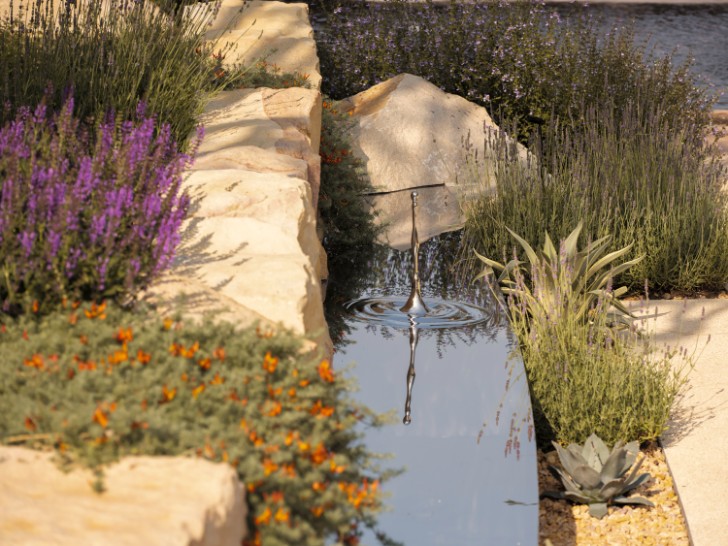
The sliced stainless steel feature on the other side of the path echoes this waterscape, adopting the same form. This extremely minimalist, thin mirrored water-simulation device, interspersed among the brown-yellow Hepu stone, creates a striking contrast of material properties. These two installations establish the "dynamic" attribute within the garden, also contrasting crafted precision with natural traces.
Furniture
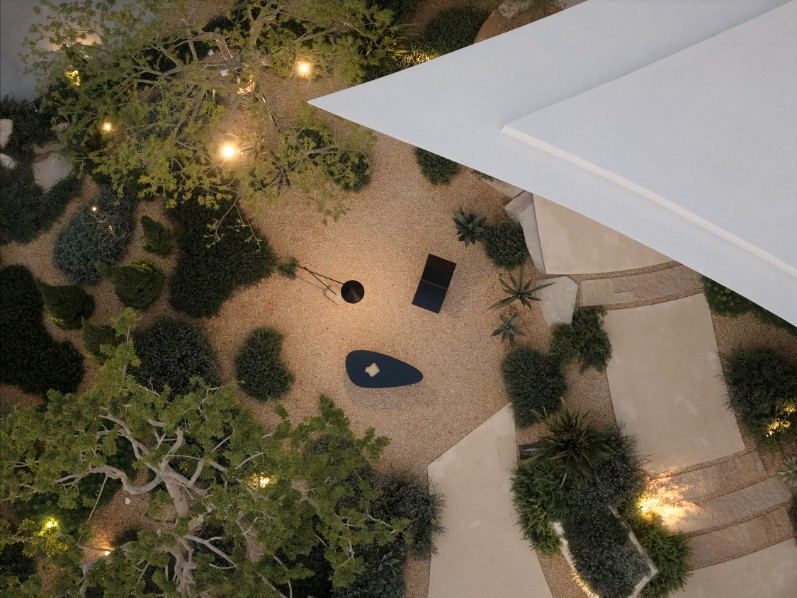
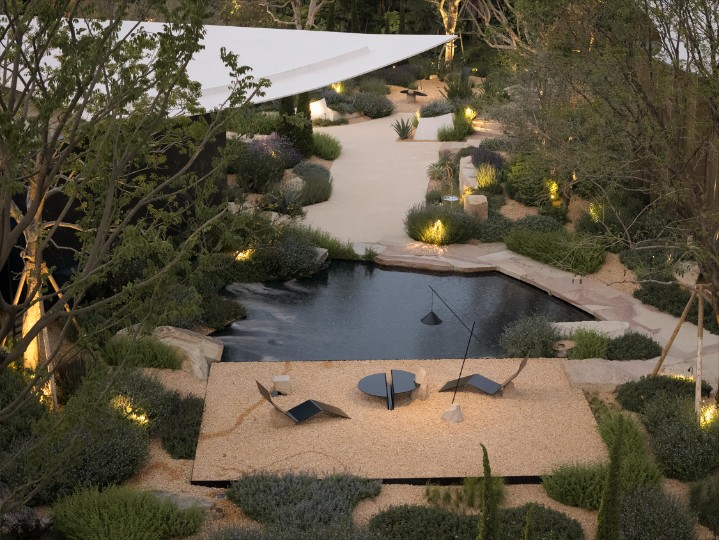
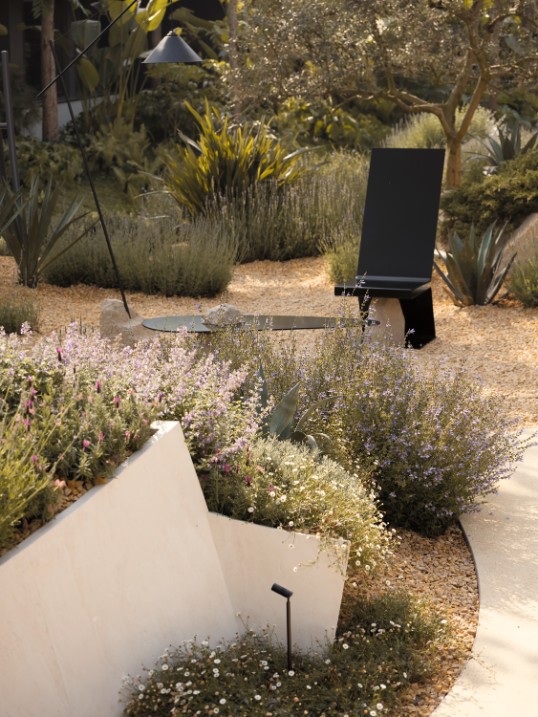
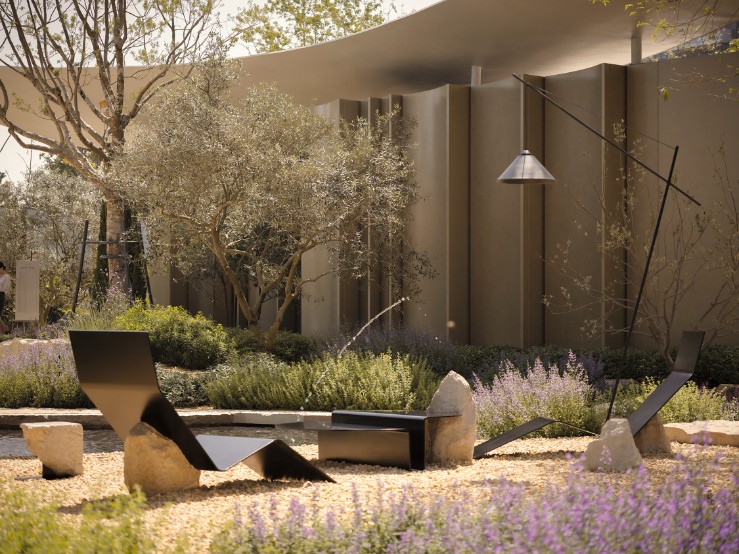
Furniture art is "sculpture to be used." With a chair and a set of coffee tables, we aimed to convey a "posture of life." Understanding the initial physical characteristics, we decided to let the materials themselves answer the question. Simply by recombining the site's stone and steel, the final furniture forms emerged. As artistic carriers fostering dialogue within the site, they transmit aesthetic emotions through form, material, and craftsmanship.
Stone
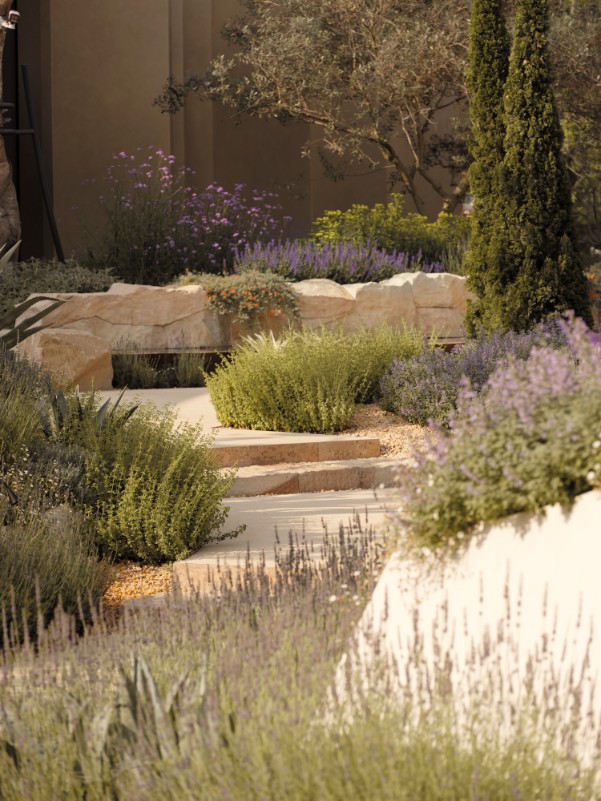
Earth-toned stones visualize "time," creating a sense of age. The sculptural art of the stones starts from contrast itself—the patterns of aged patina and traces of artificial carving—to trace back to the geomorphic features of Saint-Tropez thousands of miles away, narrating the stories behind the scene creation.
Plants
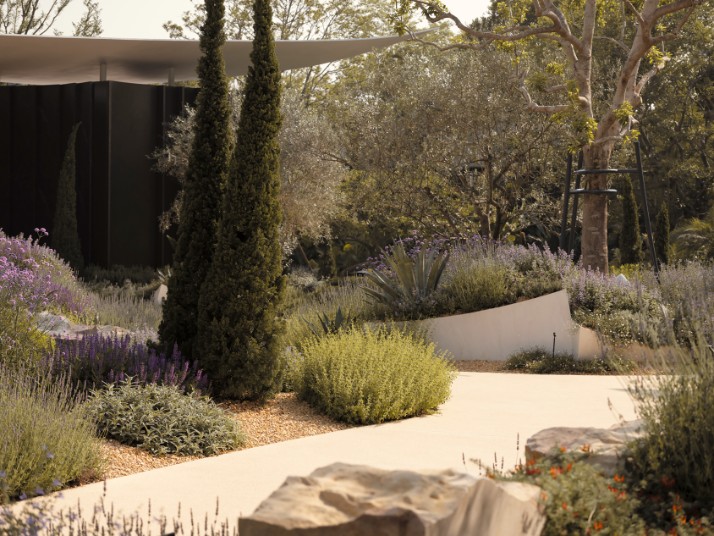
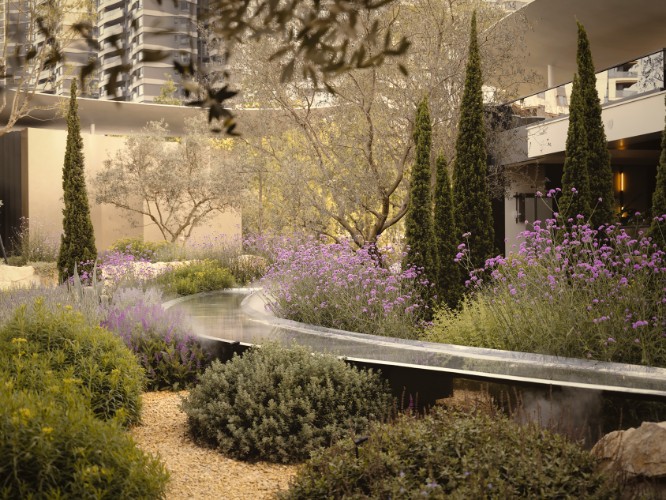
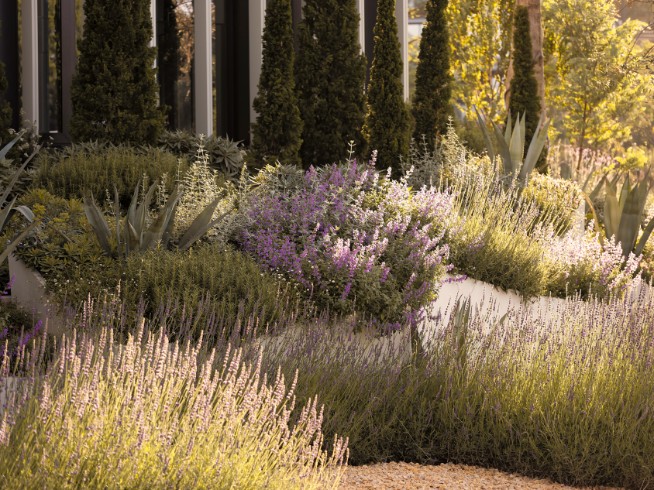
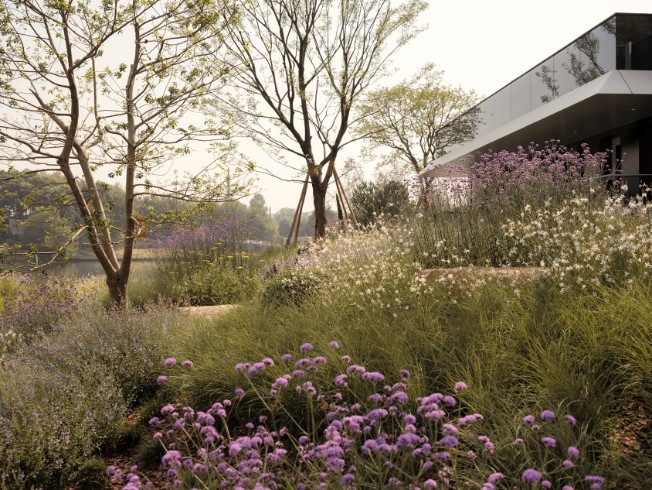
The colors of the plants can harmonize the color relationships of the site. The establishment of a Mediterranean Southern France vegetation system endows the site with romance and relaxation. Through systematic considerations of color systems, ecological systems, and morphological systems, an ecosystem serving the overall project is shaped.
The overall cluster forms is attached to the terrain structure like dotted strokes. Using plants to construct these dotted structures creates a contrast in form. Combined with color, it expresses a clear hierarchy and unifies the picture harmoniously

In 2007, in response to China's rapidly growing design market, WEIMAR GROUP officially established WEIMAR China in Shanghai to provide professional landscape design services. It quickly emerged as one of the leading firms in the landscape design industry. In 2017, Chengdu WEIMAR Landscape Planning Co., Ltd. was founded.
A.t.e.l.i.e. r. R is a professional design team dedicated to landscape narratives as its core medium. Led by Chief Creative Director Liu Geng (Ruoven), the studio specializes in creating symbiotic landscape spaces, guided by three fundamental principles: “Shelter · Trace-lessness,” “Comprehensive Aesthetics,” and “Embracing Nature · Restrained Intervention.”
We are committed to shaping landscape experiences with emotional resonance and humanistic depth across residential communities, public spaces, commercial settings, and cultural-tourism projects. Through artistic refinement and restrained craftsmanship, we transform landscapes into poetic mediators between people and their environment.