
- 2026 Pioneer Prize
- From Public buildings
Shenzhen Bay Cultural Plaza
Project Description
The Oval Partnership's brief for Shenzhen Bay Cultural Plaza was to connect the bay with its broader urban context and build a genuine waterfront destination – one that could sit alongside Tokyo Bay or San Francisco Bay in cultural weight and public life.
Shenzhen's cultural ecosystem is fast expanding, and the site in Houhai sits close to several major institutions – well placed to function as a culture-led development. We set out to reconnect the site with the urban fabric, linking the old bay area with new waterfronts and transit infrastructure to cultural destinations.
Our scope covered all masterplanning and most of the architecture, with selected facades and buildings delivered by other project partners. Driven by proprietary Digital Placemaking (DPM) technology, we analysed the site and tested our design decisions through evidence-based iterations.
We viewed the multi-level site as a three-dimensional lattice, with points of connection spanning it horizontally and vertically. DPM analysis of the existing scheme identified where pedestrian flow was thin or not evenly tributed. The revised masterplan addressed this directly, improving projected footfall by 30–60% overall, with gains of up to 70% at ground level and 120% in the basement. It also established clear visual connections from the sunken plaza through to the ground and elevated levels.
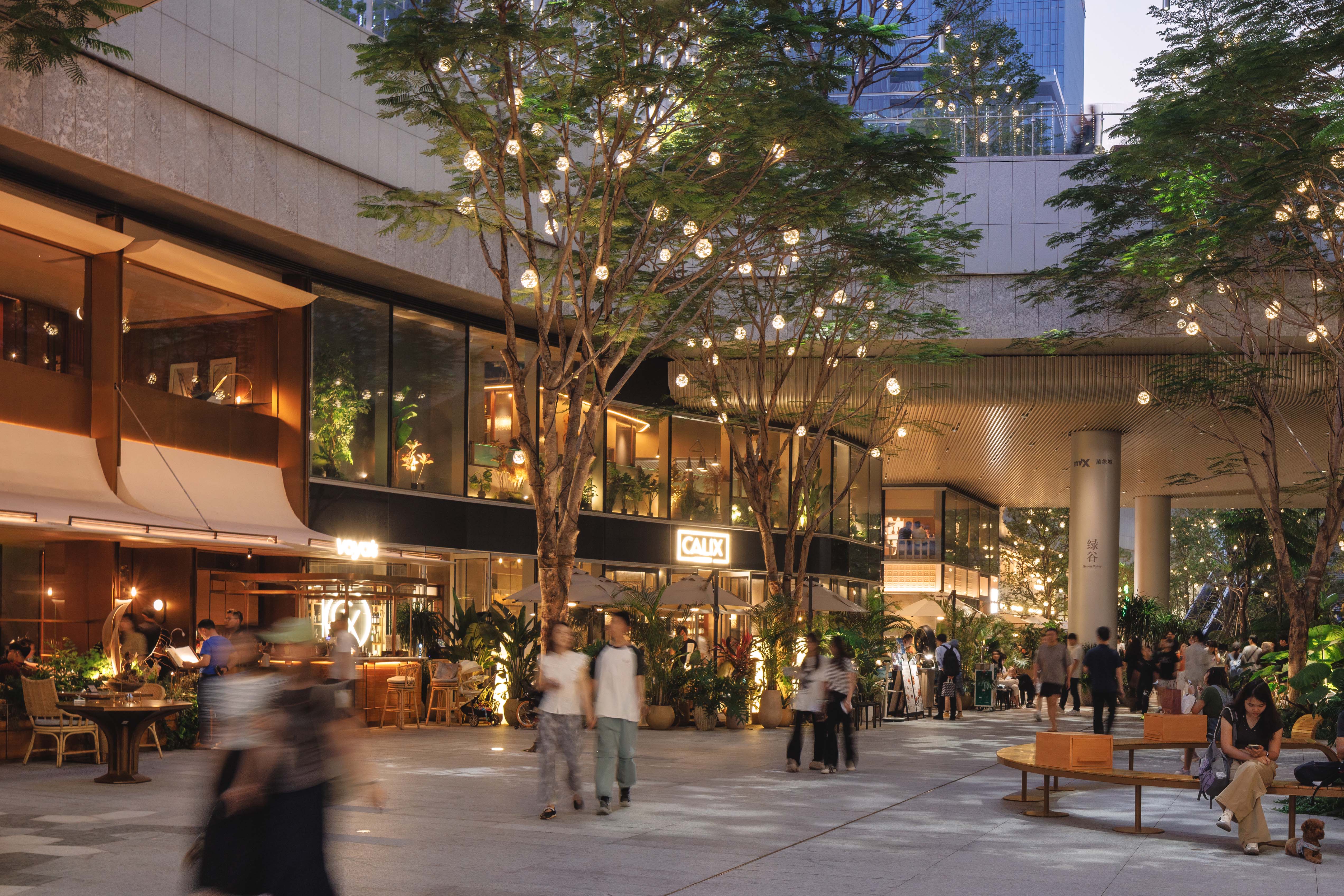
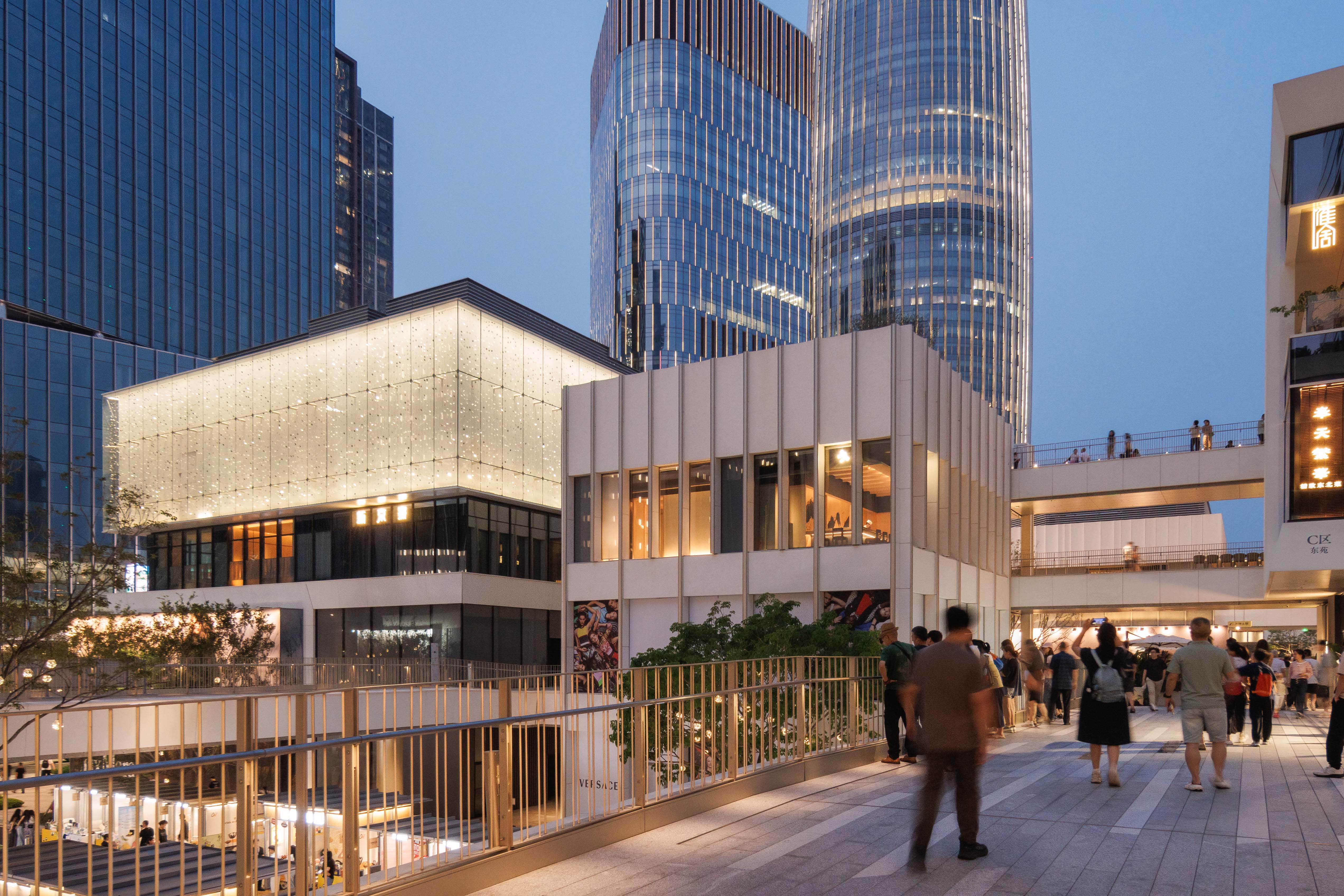
The resulting public realm interweaves culture, commerce, landscape and movement. Working with cultural entrepreneur Philip Dodd of Made in China, we drew on local crafts, brands and community voices to shape five distinct villages – Field, Terrace, Townhall, Lighthouse and the Bay – each with its own character and mixed uses. Streets, squares, terraces, alleys and planted open spaces are carefully arranged to support informal encounters, everyday use and community life.
What's notable about the architecture is its absence: built form steps back to give priority to landscape as climate moderator, social setting and horticultural ground. A layered pedestrian network – ground paths, elevated walks and underground spaces with shops and greenery – links transit, culture and the bay, while reducing pressure on any single level and making the site more walkable throughout the day.
This eco-cultural framework offers a deliberate counterpoint to Shenzhen’s pace, embracing the idea of manmanlai (‘take it slow’) and encouraging unhurried movement through contiguous public spaces, elevated streets, treewalks and subterranean 'green valleys'. At the same time, the development responds to Shenzhen’s youthful energy by creating spaces in which the next generation can flourish, bringing together creativity, technology and ecology in support of emerging urban communities. The project stays grounded in Shenzhen itself, drawing on the city’s own elements to create a destination that is outward-looking yet locally rooted.
Shenzhen Bay Cultural Plaza’s sense of connection is not only social but also infrastructural and regional. The development is directly linked to Houhai Station, served by Metro Lines 2, 11 and 13, giving efficient access to business districts, Shenzhen Bao’an International Airport, Xili Station and the wider city. Its proximity to Shenzhen Bay Port also strengthens links with Hong Kong and supports the broader Bay Area’s one-hour living circle.
Completed in 2025, Shenzhen Bay Cultural Plaza proposes an alternative model for placemaking. Data-driven analysis and cultural sensitivity mutually reinforce one another, producing a highly connected district designed around human experience.

Our Multidisciplinary Team Transforms Cities and Creates Places You Want To Be.
